ERP Today

ServiceNow’s Armis Acquisition Signals Strategic Enterprise IT Push
ServiceNow's $7.75 billion acquisition of Armis aims to enhance its cybersecurity offerings by merging its configuration management database with Armis' real-time asset discovery tools, thereby tripling its security revenue and addressing the integrated vulnerability management needs of enterprises.
Microsoft Research Maps 2026 AI Agenda: From Lab Assistants to Trusted Agents
Microsoft Research forecasts 2026 as a pivotal year where AI evolves into collaborative 'digital coworkers' across sectors, emphasizing security, agentic systems, and quantum advancements that align with human-centered goals and redefine enterprise resource planning.
Alphabet’s Intersect Buy Tightens Link Between AI Data Centers and Clean Energy Infrastructure
Alphabet is acquiring Intersect for $4.75 billion to enhance its data center and energy infrastructure capabilities as part of its AI strategy, while Intersect will operate independently and collaborate closely with Google on new facilities.
SAP, Partners Turn Embedded Business AI into Concrete ERP Wins
SAP and its partners are transforming AI from concept to implementation by integrating SAP Business AI and SAP BTP into workflows that enhance efficiency and collaboration, as illustrated by successful case studies from companies like FRoSTA and Aspen Pumps.
2025 Was a Pivotal Point for Oracle NetSuite: Where Is Its AI Roadmap Heading in 2026?
Oracle NetSuite laid the groundwork in 2025 for an AI-native ERP experience, with 2026 expected to see the launch of key features like NetSuite Next and Autonomous Close, which will embed AI into financial and operational workflows, moving AI from conceptual to operational use.
5 Predictions: What Salesforce Leaders Expect from Enterprise AI Agents in 2026
At a Salesforce roundtable, executives predicted that by 2026, companies will face a clear divide based on their adoption of AI agents as operational infrastructure, leading to significant changes in voice communication, engineering delivery models, governance structures, and user experiences.
RPA Pushes Healthcare from Manual Admin to Intelligent Automation
Hospitals are increasingly adopting robotic process automation (RPA) to alleviate administrative burdens and workforce shortages while enhancing patient experiences, evolving from basic scripts to AI-enabled intelligent automation that reshapes claims management, scheduling, and compliance.
Epic’s Healthcare-Native ERP, AI Gambit: Disruption or Long Game Against Major Players?
Epic's development of a healthcare-native ERP aims to integrate seamlessly with its EHR and AI features, potentially disrupting the market by consolidating operational functions while forcing health systems to reflect on their existing application frameworks, though full capabilities are not expected until 2027.
Palo Alto, Google Cloud Expand AI Security Alliance as 99% of Organizations Report AI Attacks
Palo Alto Networks and Google Cloud have expanded their partnership with a nearly $10 billion deal to enhance AI and cloud security, integrating Palo Alto’s Prisma AIRS platform with Google Cloud’s infrastructure to provide comprehensive security across hybrid multicloud environments.
Inside Salesforce’s Agentforce Roundtable: How Did Leaders Really Use AI Agents in 2025?
Executives are shifting their focus from the hype of AI to practical implementation, emphasizing the importance of data activation, hybrid reasoning models, and effective change management to ensure AI agents deliver value in real-world applications.
mid-market multi-entity ERP
BillingPlatform Adds Platform Capabilities for Advanced Revenue Insights
BillingPlatform's upgraded capabilities transform billing into a real-time decision system for revenue leaders, enhancing visibility, reducing manual reporting, leveraging AI for transparency and robust integration.
SAP security
How SAP Customers Responded to Rising Cybersecurity Threats in 2025
In 2025, SAP customers expressed increasing concern over cyberattacks, particularly regarding data exfiltration and integration risks, while patch management remained a significant challenge, highlighting the necessity for enhanced security strategies and investments in SAP-specific protections.
Oracle NetSuite Introduces NetSuite Next to Reimagine ERP with Embedded AI, Natural-Language Workflows
Oracle NetSuite's NetSuite Next update introduces conversational AI and agent-driven workflows within its ERP suite, enabling users to perform tasks through natural language prompts and intelligent automation, thereby simplifying operations and enhancing user accessibility.
Certinia Launches Winter ’26 Release for Improved Agentic AI, Workflow
Certinia's Winter '26 release leverages AI to enhance operational efficiency for services-centric organizations by automating project monitoring, streamlining sales-to-delivery processes and improving customer success management.
Unit4 and Pragmatic AI
IBM Brings Three New AI Agents to Oracle Fusion Applications AI Agent Marketplace
IBM's introduction of three new AI agents built with Oracle AI Agent Studio enhances efficiency for Oracle Fusion customers, automating tasks in finance, sales, and procurement while paving the way for future HR and supply chain agents.
Cloud ERP Takes Center Stage for Comic Publishers Confronting Creative, Operational, Market Pressures
Cloud ERP is becoming a crucial tool for comic book publishers by streamlining complex production, enhancing collaboration, improving distribution, and supporting financial management, thereby enabling them to meet rising consumer demands and navigate the challenges of digital transformation.
IBM Advances Generative, Agentic AI Deeper into SAP Operations with ICAMS
IBM announced its Application Management Suite for SAP (ICAMS), designed to enhance SAP transformation through generative and agentic AI, thereby streamlining management processes and improving operational efficiency across SAP environments amidst the complex transition to S/4HANA.
The Importance of Professional and Managed Services for ERP Vendors
Manufacturing and distribution organizations are increasingly adopting managed services for ERP systems to cope with labor shortages and budget constraints, allowing internal teams to focus on strategic initiatives.
Aptean Launches AppCentral 2.0, Bringing Vertical AI Into Daily Industrial Operations
Aptean’s AppCentral 2.0 is a Vertical AI platform that enhances operational efficiency in manufacturing and distribution by integrating AI agents for real-time decision-making, automating routine tasks, and providing predictive insights.
Rimini Street Pushes Agentic AI into ERP Without Forcing Upgrades
Rimini Street's launch of the Rimini Agentic UX, an AI-driven layer for existing ERP systems, aims to enhance productivity and process automation without the need for costly upgrades as strategic third-party support.
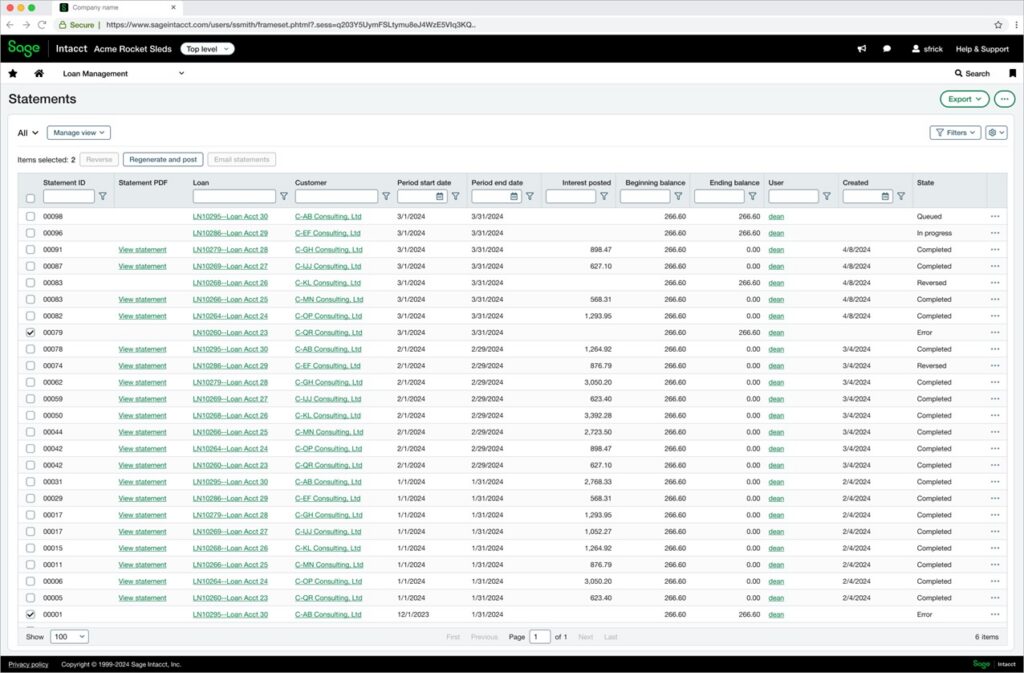
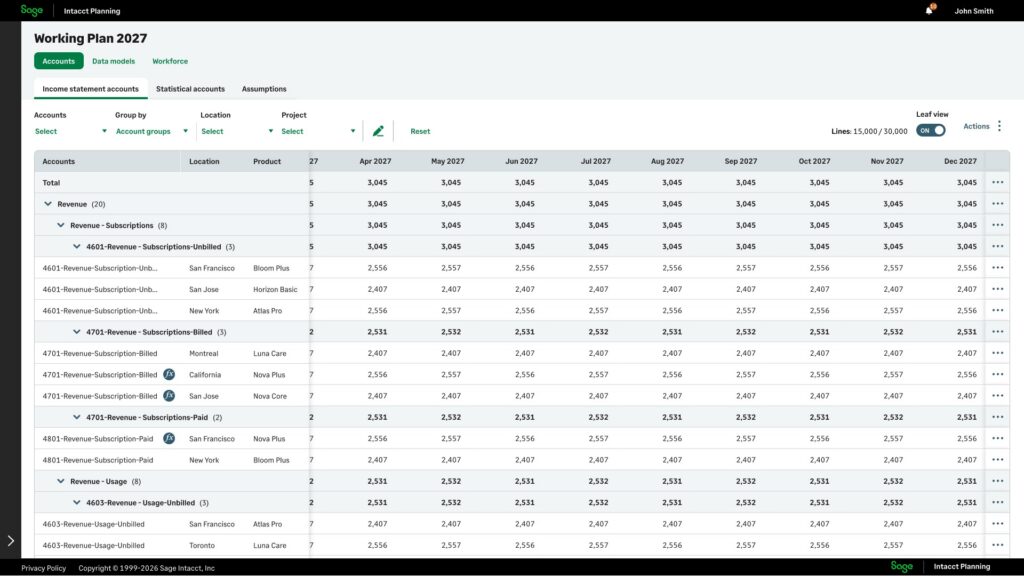
Sage Intacct Launches in Singapore, Bringing Cloud Finance and AI to APAC Growth Plans
Sage has launched Sage Intacct in Singapore to enhance cloud financial management for mid-sized businesses, enabling faster financial closes, compliance with local regulations, and integration across Asia’s complex multi-entity environments.
Cloud Security Has Hit a Speed Wall as AI, Multicloud Outpace Defenses
The December 2025 Palo Alto Networks State of Cloud Security Report reveals that cloud security is lagging behind the rapid growth and complexity of modern IT, with a critical emphasis on identity risks and the urgent need for integration of security operations to protect increasingly vulnerable cloud systems.
Businessperson hold an image of an AI agent in hand.
Why the Future Belongs to Pragmatic, Practical AI
The focus for manufacturing leaders has shifted towards pragmatic AI solutions that deliver measurable operational improvements in ERP processes by driving profitability amidst growing AI investment in the sector.
IFS Acquiring Softeon, Bringing Industrial AI to Warehouse Management
IFS's planned acquisition of cloud-native Softeon aims to enhance warehouse management capabilities, integrating AI and robotics into operations, amidst a growing $8.6 billion market driven by labor shortages and automation demands.
insightsoftware
Vertex Expands Role in Oracle Cloud ERP Environments with Full-Scale, End-to-End Tax Automation, Compliance Platform
Vertex has enhanced its tax determination and compliance capabilities within Oracle Cloud ERP through a unified platform that supports global requirements, automates processes, and improves operational efficiency for over 1,700 mutual customers.
Syspro Joins National Association of Manufacturers
Syspro has joined the National Association of Manufacturers (NAM) to collaborate with U.S. manufacturing leaders on innovation, supply chain resilience and digital transformation.
SAP, Oracle Lead the Charge as AI-Driven Performance Management Market Targets USD 6.33B by 2030
The employee performance management market is expected to grow from $3.52 billion in 2025 to $6.33 billion by 2030, driven by a shift towards continuous, analytics-enabled performance cycles embraced by major firms like Adobe and Microsoft, with AI-centric platforms at the core, as organizations increasingly link performance to skills-based talent strategies and digital transformation efforts.
Oracle NetSuite Recognized as Leader in Gartner Magic Quadrant Reports, as Demand for AI-Driven ERP Accelerates
Oracle NetSuite has been named a Leader in Gartner's 2025 Magic Quadrant for Cloud ERP and Financial Planning Software, highlighting its AI-enhanced capabilities, expanded customer base, and integrated architecture that addresses the evolving demands of service-centric organizations.
Oracle Loads Up on AI Infrastructure as OCI Backlog, Data Center Commitments Surge
Oracle's Q2 FY2026 financial results reveal a dramatic surge in cloud and AI offerings, with remaining performance obligations rising to $523.3 billion, total cloud revenue hitting $8 billion, and significant growth in Oracle Cloud Infrastructure and GPU revenue.
Salesforce Agentforce Playbook: Five Steps to Fund and Scale Enterprise AI
In a competitive AI market, the key to success lies not in the technology itself but in crafting a solid business case that emphasizes clear problem definition, coalition-building, scalable solutions, and pre-deployment governance to ensure measurable ROI and executive buy-in.