Editor’s Choice

SAP logo displayed at company office, representing enterprise software security and monthly Patch Day updates.
SAP February Patch Day Puts ABAP and Platform Risk in Focus
SAP’s February 2026 Patch Day delivered 26 new notes and one update, with critical exposure centered in ABAP and core platform services. Vendors warn impact depends on how trust and integrations operate inside each landscape.
Closing the ERP Intelligence-to-Action Gap
Over 70% of ERP initiatives are projected to fail by 2027 due to the gap between insights generated and coordinated actions taken, as traditional ERP systems, despite modernizations such as AI and analytics, struggle with structural issues that prevent timely decision-making across interconnected divisions.
Business user interacting with AI-powered analytics on a laptop, illustrating enterprise AI and real-time data intelligence.
The New ERP Backbone: Databricks, Inetum, and the Shift to AI-Native ERP Architectures
ERP systems are entering an AI-augmented era, but many data foundations are not ready. This analysis examines why AI-native ERP architectures are emerging, how Databricks is becoming the intelligence layer, and how Inetum helps enterprises operationalize AI with trust, governance, and scale.
Acumatica Summit Recap: ERP Elevated as Proactive Intelligence Infrastructure
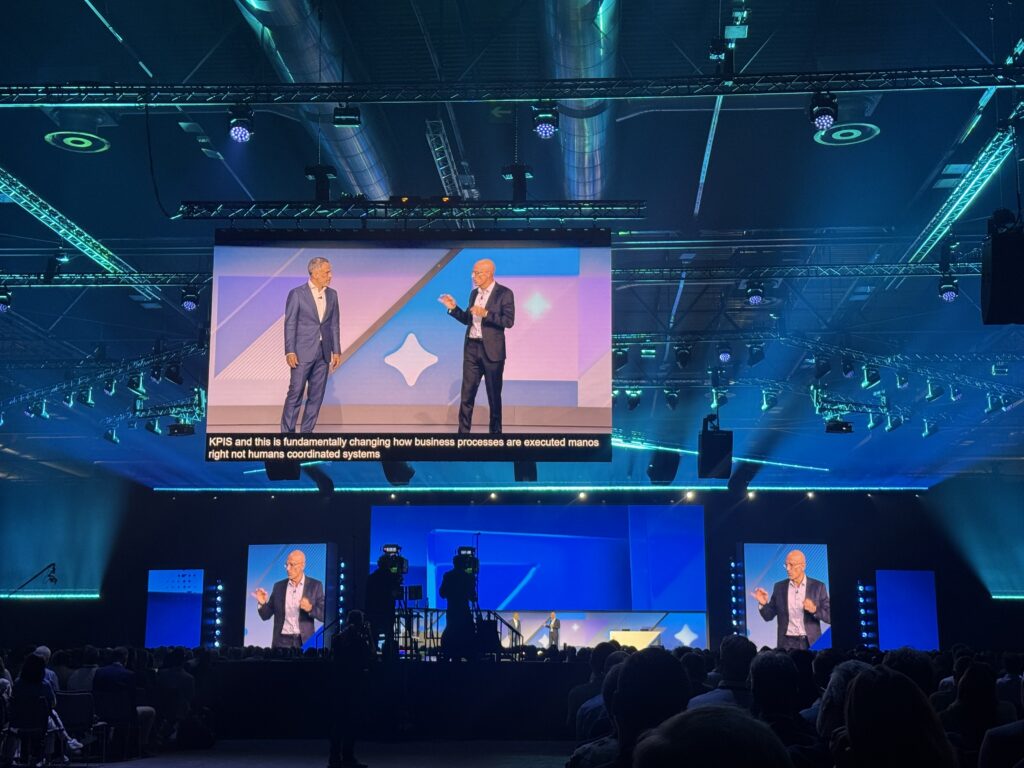
At Summit 2026, Acumatica executives revealed a vision for ERP systems as predictive intelligence platforms leveraging digital replicas and AI to streamline operations, improve decision-making, and enhance user experiences through behavioral telemetry, all while emphasizing a partner-led growth model to address mid-market challenges.
Acumatica Redefining ERP as System of Intelligence, Enabling Proactive Decision-Making
Acumatica is transitioning ERP platforms from traditional transactional automation to autonomous systems that support proactive decision-making, emphasizing the need for high-quality data governance and industry-specific functionality.
ERP
AI’s Last-Mile Failure: Why ERP Value Breaks Down After the Investment
Organizations investing in AI within ERP systems often fail to achieve expected results not due to technology issues, but because they neglect to redesign decision-making processes and empower employees to effectively use AI insights.
Finance professional working on keyboard, with data graphs filter.
Scaling Finance in SaaS: How Zuora Enables Flexible Billing and Revenue Automation
Billing complexity often overwhelms core ERP systems. This article explains why SaaS companies use Zuora to manage automated billing and revenue recognition without constraining growth.
Image of finger touching an AI agent in digital space.
CData, Databricks, and the Expanding MCP Ecosystem
CData has been named a Featured Launch Partner for the Model Context Protocol in the Databricks Marketplace. The launch makes CData Connect AI available inside Databricks, positioning it as infrastructure for building AI agents that need governed access to live enterprise systems.
Agentforce Manufacturing Addresses Labor Shortages, Operational Inefficiencies
Salesforce released Agentforce Manufacturing, a suite of AI agent templates enabling manufacturers to enhance autonomy and efficiency while mitigating labor shortages, marking a significant shift in the industry toward predictive and proactive operations.
DMI and Data Migration
New Year, New Core: Why 2026 Is the Year to Finally Let Go of SAP Legacy Data
As SAP organizations approach 2026, the imperative to eliminate legacy data and systems is heightened by the need for a Clean Core strategy. The JiVS Information Management Platform offers a solution to effectively decouple historical data and streamline data migration to SAP S/4HANA.
Agentic AI, Composable Architectures Are Redefining Manufacturing ERP as Autonomous Operations
Manufacturing technology executives are experiencing a major shift in ERP systems from transactional backends to autonomous AI-driven decision engines that automate procurement and production processes, with successful implementations emphasizing governance frameworks over algorithm sophistication.
Retail AI Hits NRF 2026: SAP, Microsoft, Workday Turn Agentic Platforms into New Operating System for Stores and Commerce
Retail tech giants SAP, Microsoft, and Workday are leveraging AI to transform commerce operations into integrated, agent-driven systems at the NRF 2026 event, showcasing a shift from isolated applications to comprehensive retail infrastructure.
ERP Technology Developments Impacting Manufacturing Jobs in 2026
Manufacturing technology executives must decide by late 2025 whether to adopt autonomous AI agents to enhance operational efficiency or risk losing competitive advantages with governance emerging as the key challenge for successful implementation.
Data processing over infrastructure construction site
Six Data Pivots That Decide Whether Your AI Strategy Scales in 2026
AI is forcing businesses to modernize data architectures. CData’s e-book outlines six pivots to scale AI-driven products.
MCP Platform
How to Choose an MCP Platform for Production-Scale AI Agents
Model Context Protocols (MCPs) standardize secure, real-time access for AI agents to enterprise systems. MCP features such as plug-and-play integration, real-time monitoring, and scalability become a differentiator as businesses embed AI into core workflows.
Epic’s Healthcare-Native ERP, AI Gambit: Disruption or Long Game Against Major Players?
Epic's development of a healthcare-native ERP aims to integrate seamlessly with its EHR and AI features, potentially disrupting the market by consolidating operational functions while forcing health systems to reflect on their existing application frameworks, though full capabilities are not expected until 2027.
data maturity ai
Data Maturity Is the Strongest Predictor of AI Success in 2026, Says New CData Study
Despite investment in AI copilots, many enterprises' lack of robust data infrastructure hampers their ability to derive sustainable ROI from AI initiatives, with only 6% of organizations considered genuinely AI-ready due to fragmented data systems.
SAP security
How SAP Customers Responded to Rising Cybersecurity Threats in 2025
In 2025, SAP customers expressed increasing concern over cyberattacks, particularly regarding data exfiltration and integration risks, while patch management remained a significant challenge, highlighting the necessity for enhanced security strategies and investments in SAP-specific protections.
AI-First Monetization and Zuora
The Death of the Static SKU: Why AI-First Monetization Demands a New Architecture
The generative AI revolution is prompting a shift in software product roadmaps, necessitating a move from rigid billing systems based on static SKUs to dynamic pricing models that enhance agility and allow for complex consumption-based monetization.
SAP S/4HANA Projects and DMI
The Gift No CIO Asks For (But Always Gets): Why SAP S/4HANA Projects Keep Inheriting the Past
CIOs face the challenge of managing legacy systems and historical ERP data, which often drains resources and complicates migration to SAP S/4HANA, but organizations can overcome this by decoupling data from applications using platforms like JiVS.
Inside the AI Shift Transforming Customer, Field Service and What it Means for ERP
The Salesforce 7th annual State of Service report reveals a rapid transformation in customer service driven by AI agents, predicting that by 2027 AI will resolve half of service cases, prompting organizations to enhance data integration and redefine service roles, ultimately positioning service as a blueprint for broader enterprise architecture change.
headline - stock image of Mulesoft statistics
MuleSoft and Salesforce Push Toward an AI Agent Future, Reframing Integration as Enterprise Automation
At the Agentforce Tour in NYC, Salesforce and MuleSoft emphasized a shift towards AI-driven automation, integrating APIs, RPA, and AI agents into a cohesive model for orchestrating intelligent workflows across systems.
AWS Enters the AI Factory Race, Raising Stakes for Cloud-Data Sovereignty, Enterprise Architecture
Amazon Web Services (AWS) is launching on-premises AI factories that integrate advanced hardware and managed service offerings into customer data centers, enabling organizations to develop and deploy AI applications while addressing data sovereignty concerns and enhancing their existing ERP systems.
Zuora Monetization Catalog
How Zuora’s New AI-Ready Catalog Targets the Hard-Coding Bottleneck
Zuora's new Monetization Catalog aims to alleviate the tension between product innovation and rigid financial infrastructure by enabling business users to create and launch dynamic, usage-based pricing models without code.
JiVS IMP and AI Ready Data
Why 92% of Companies Lack AI-Ready Data
The Cisco AI Readiness Report reveals that while 97% of organizations prioritize urgent AI deployment, 92% are unprepared due to fragmented and siloed data across disparate systems, indicating a critical need for unified and clean foundational data to enable effective AI implementation.
Decommissioning SAP Legacy Systems
Decommissioning SAP Legacy Systems: Turning Technical Debt into Strategic Value
To mitigate the significant costs and risks associated with maintaining legacy ERP systems, organizations should adopt a structured decommissioning strategy that focuses on total cost of ownership reduction and compliance risk mitigation through a phased approach involving data analysis, extraction, and secure archiving.
Zuora and AI Pricing
Zuora Unveils New Tools to Tackle the AI Pricing Puzzle
The AI boom is prompting organizations to revamp their pricing strategies, with Zuora's new monetization platform offering tools to manage dynamic service value, enhance customer visibility, and support scalability amidst unpredictable consumption patterns.